
Guide to Alabama Divorce Records
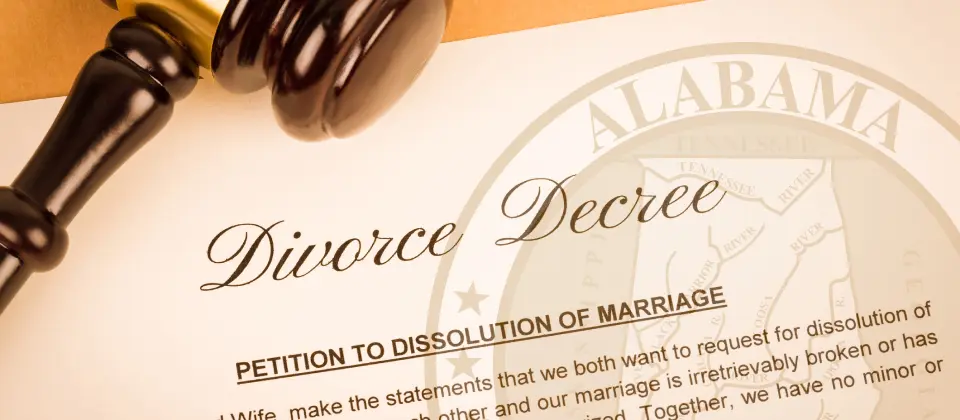
Although divorce laws and record access rules vary by state, the divorce process follows a general legal framework in the United States. In Alabama, when a spouse files a petition for divorce in the Circuit Court, the court generates official case files and several documents during proceedings. These documents ultimately become divorce records, and they serve administrative and legal purposes.
While the level of detail may vary by the type of record, a typical Alabama divorce record will have the following information:
Name of both parties (spouses) to the divorce
County where the divorce complaint was filed
Name of the Circuit Court that handled the divorce case
Date the divorce was finalized or granted
Court case number (docket number)
Detailed rulings on child custody, property division, alimony, and child support
Judgment type (contested, uncontested, amended, or default)
Alabama maintains divorce records at the county and state levels in both physical and digitized formats. You will generally find older divorce records in physical formats, especially as paper files or microfilm. These are records created for cases before the emergence of electronic record keeping. However, recent Alabama divorce records are mostly available in digital formats and can be accessed through court systems or other state-approved services.
The divorce procedure sometimes involves property division and child custody. Knowing how divorce works in Alabama and how property division and child custody are handled in a divorce will help you understand how to access divorce records in the Yellowhammer State.
Where are Alabama Divorce Records Stored?

At the county level, you will find the official case files of an Alabama divorce record at the Circuit Court in the county where the divorce was filed. These files are maintained by the Circuit Court clerks and typically include motions, pleadings, orders, and the final divorce decree.
Statewide divorce certificates and divorce indexes are available at the Alabama Department of Public Health (ADPH) through the Center for Health Statistics. Divorce records maintained at the state level are based on the reports submitted by county-level Circuit Courts. These reports are typically summarized confirmations of divorces finalized in the state and are not substitutes for detailed legal documentation.
Is Alabama a 50/50 Divorce State?
No, Alabama is not a 50/50 state, otherwise known as a community property state. Rather, the state operates an equitable distribution system for dividing debts and assets in divorce cases. Unlike community property states, where the law divides most assets acquired during marriage almost equally (50/50), Alabama divides marital property in a manner that it considers fair and just.
Under the equitable distribution model, the county divides assets based on what is fair, not necessarily equal. What is fair largely depends on the specific personal and financial situations of both spouses. Per Alabama Code, Section 30-2-51, marital property is subject to equitable division, but separate property is not considered part of the marital estate unless used for the common benefit of the marriage.
However, the judge in a divorce case has the discretion to determine an equitable outcome, which does not always mean equal. In other words, a judge may divide assets unevenly if one spouse made substantially greater contributions to the marriage or has greater financial needs.
In Alabama, courts typically consider the following factors when making property division decisions in divorce cases:
Length of the Marriage - Spouses in older marriages often have deeper financial reliance, which may affect how assets are divided.
Income and Earning Capacity - Each spouse's current income and future ability to earn income are evaluated. Both can influence how the court divides marital assets.
Contributions of Each Spouse - The court can consider each spouse's financial and non-monetary contributions to decide what is fair and just in dividing marital assets during a divorce case.
Marital Property and Separate Property Consideration - Typically, only assets and debts acquired during marriage are subject to division during divorce cases. The court considers property owned before marriage and those received as gifts or inheritance as separate property.
Fault Consideration - Alabama is a no-fault divorce state. However, the court can still consider spouses misconduct (where applicable) in deciding the equitable division of marital assets.
Types of Alabama Divorce Records

Alabama has multiple divorce record types, each serving different administrative or legal purposes. While some have comprehensive details about the divorce proceedings and rulings, others primarily exist to provide the public proof of divorce.
For example, if you need proof of an Alabama divorce to update your Social Security record or for remarriage (administrative purposes), what you need is a divorce certificate. On the other hand, parties to a divorce case, legal professionals, or family members of parties to a divorce will require a divorce decree to verify alimony, property division, custody, and support.
The following are the major types of divorce records in Alabama:
Alabama Divorce Certificate (Certificate of Divorce)
This is a document issued by the Alabama Department of Public Health (ADPH) through the Center for Health Statistics, summarizing a divorce in the state. While not a substitute for a full divorce decree and lacking judicial terms, a divorce certificate contains limited but standardized information. This typically includes the names of both spouses, the county where the divorce was granted, and the date of divorce.
An Alabama divorce certificate is an official confirmation that a divorce occurred in the state. It is commonly used for history checks, identification, remarriage, and other administrative purposes. Under state law, divorce certificates are considered unrestricted vital records. This means you can access one, provided you have sufficient identifying information.
Divorce Decree (Final Judgment of Divorce)
Also known as the final judgment of divorce, an Alabama divorce decree is the most authoritative document in any divorce granted in the state. It is the official court order that legally terminates a marriage and stipulates judicial rulings and all issues adjudicated during the divorce process. This makes it legally binding on both parties.
In Alabama, the Circuit Court in the county where a divorce was filed issues the divorce decree. Any typical final judgment of divorce in the state will contain the following rulings:
Property and Debt Division - A divorce decree should outline how marital property, including debts and assets, is divided between both parties.
Alimony - If the court orders it, a divorce decree will detail the type, amount, and duration of spousal support.
Child Custody and Support - This describes in detail the arrangement for legal and physical custody of a child and the kind of support intended.
Final Judgment Date - The official date the judge signs the decree, which marks the date the termination of marriage was granted.
The rulings in an Alabama divorce decree and the document's authority make it possible for parties involved to enforce support and deal with immigration or property issues.
How to File for Divorce in Alabama (Step-by-Step)
The state has a mandatory residency requirement for anyone intending to file for divorce. Per Alabama Code, Section 30-2-5, at least one spouse must have lived in the state for 6 months before filing the complaint if the other party is not an Alabama resident. However, if you and your spouse both reside in the state, you can file a divorce complaint at any time.
Before taking the major steps to filing a divorce, it is essential to identify if the divorce will be contested or uncontested. The type of divorce can play a key role in how much the process will cost you, the complexity, and how long it will take to complete the process.
Uncontested Divorce - In an uncontested divorce, both parties (spouses) typically agree on all issues before filing. Such issues may include child support, marital property division, alimony (if any), and child custody and visitation.
Uncontested divorces require fewer court appearances. They are typically less expensive (compared to contested divorces) and faster to complete since there are no disputed matters. Additionally, they also allow both spouses to have control over what happens to their assets and children, enabling them to decide property division and custody terms.
Contested Divorce - If you and the other spouse do not agree on all issues, your option is a contested divorce. Common points of disagreement in contested divorces include child custody or visitation, alimony, child support, and division of marital estate. The judge is responsible for making decisions on behalf of both spouses in a contested divorce based on Alabama law. This typically follows a longer legal process that includes formal discovery, court appearances and hearings, mediation attempts, and potential trial.
Both spouses have less control over what happens to their marital property and children in a contested divorce. Once the judge rules, both parties must comply with the court's decision, even if they disagree.
If you meet the state's residency requirement and have identified the type of divorce based on the prevailing circumstance, you can follow the steps below to file for divorce in Alabama.
Step-by-Step Divorce Process
The steps required for the divorce process in Alabama can vary slightly between counties and whether the case is contested or uncontested.
Prepare the Filing Packet
This is a critical step where you gather the documents needed to open a divorce case. Make sure your paperwork is accurate and complete to avoid delays. Do the following at this stage:
Identify the Divorce Path (1A vs. 1B) - Once you decide to move forward with a divorce, decide if it will be contested or uncontested.
Prepare the Required Documents - Assemble the following documents:
Complaint or Petition for Divorce - This document helps to initiate the case and allows you to state the grounds for divorce, requests for relief, and basic information about the marriage. Be sure to notarize it.
Financial Affidavits - These documents are required for you to disclose your income, assets, debts, and expenses. They should be notarized.
Separation Agreement (for 1A) - If the divorce is uncontested, prepare a notarized separation and settlement agreement. The content should stipulate agreed-upon terms between both parties.
Any other form required based on the type of divorce being filed. You can access them through the AOC E-Forms.
Other essential documents are a marriage certificate (copy), financial statements, income verification, domestic relations cover sheet, property inventory, residency proof, and child custody documents (if applicable).
Filing Fees and Fee Waivers (Indigency) - Each county Circuit Court in Alabama sets its divorce filing fees, typically ranging between $200 and $300. You can contact the county courthouse in the county where you intend to file for the exact fee schedules. If you are unable to pay the filing fees and costs in the case, complete the Affidavit of Substantial Hardship and Order (Form C-10A).
File the Case
After gathering your paperwork and preparing the applicable filing fee, you can take the following steps to file the case:
Where to File - File the completed paperwork with the Circuit Court in the county where either spouse lives or where the defendant resides.
Filing Methods - You can adopt any of these methods based on your preference and availability:
In person - Visit the Circuit Court Clerk's office to submit all the required documents and appropriate fees in person.
Mail - If the county Circuit Court Clerk's office allows mail-in submission, submit the appropriate forms and proof of filing fee payment by mail.
Electronic Filing (eFiling) - Several Alabama counties now offer electronic filing for divorce cases. You may file the case electronically if the local court systems in the county support e-filing of court documents.
What You Receive - Regardless of the filing method adopted, you will receive the following after filing a divorce case in Alabama:
Case number to enable you to track the divorce case
Summons if the divorce is a contested case
Initial court notices or scheduling information
Service of Process (Primarily for Contested Cases)
If you file a contested divorce in Alabama, you must serve the other party to formally notify them of the impending case through any of the following means within 30 days after the divorce is filed:
Private process server
County sheriff's office
Certified mail
Once served, be sure to provide the Circuit Court the proof of service showing you notified the other spouse. However, if you cannot locate your spouse, the court permits you to notify them using alternative service methods. The most common alternative is service by publication in a newspaper, but you must demonstrate reasonable and diligent efforts have been made to find the missing spouse.
Early Case Phase and Temporary Orders
Courts often aim to preserve the status quo during the early phase of the divorce process, especially when children are involved. In Alabama, discovery (information gathering) is a major part of this phase, which leads up to temporary orders. A temporary order helps to maintain stability and address urgent issues, such as parental, property, or financial needs, during the divorce process.
The early case phase allows both spouses to manage immediate needs while the divorce is pending. In an Alabama divorce process, here are things you can do during this phase:
Exchange relevant information, including financial documents, with the other spouse to understand the scope of the divorce case.
File a motion asking the court to issue temporary rules if immediate needs, such as child care or financial needs, arise.
Gather evidence to show the court your need for temporary relief. Evidence could include deeds (for property or marital home), pay stubs (for support), and school records (for custody).
The judge may hold a hearing after mediation to decide whether to issue the following temporary orders:
Temporary child or spousal support
Exclusive use of marital property (marital home)
Child custody and visitation
Restraining or protective orders if safety is a concern
While these orders are short-term reliefs, they remain in effect until the judge issues a final divorce decree.
Financial Disclosures and Discovery
Discovery allows both you and your spouse to have access to information required for a fair decision in a divorce case. Typically, both parties must make complete and honest disclosures during discovery.
Below are essential elements of financial discovery in an Alabama divorce case:
Mandatory Disclosure - Both spouses must provide complete, accurate financial information, which typically includes assets, income, and liabilities. An asset could be investments, bank accounts, or real estate, while liabilities are largely mortgages and other types of debts.
Discovery Tools - If the divorce is a contested case, you can use the following discovery tools for information gathering in a bid to ensure fair alimony, property division, and other just decisions:
Request Documents - Demand for physical copies of documents, such as tax returns, pay stubs, bank statements, and retirement account statements, from the other party.
Interrogatories - Send written questions to the other spouse requiring sworn answers about their finances and other case information that may ensure a fair decision.
Subpoenas - Subpoena third parties, such as your spouse's banks, employers, and pension administrators, to obtain important financial information.
Depositions - Obtain in-person, sworn testimony taken outside of court but under oath to gather information on finances and other key areas.
Case Management and Court Conferences
In a contested divorce, a case management and court conference is an early meeting where the judge, parties, and attorneys establish a plan to get the case organized and moving efficiently. Deadlines and expectations are usually set during a case management conference.
Typically, the judge expects both parties to have completed disclosures, identified unresolved legal and factual issues, and be prepared to discuss settlement. Where these expectations are not met, the following will happen at an Alabama divorce pretrial conference:
The judge evaluates progress made by both parties on financial disclosures
Clarification of contested areas relative to agreed-upon terms
The judge sets deadlines for discovery, expert reports (for property appraisal or business valuation), and depositions.
The judge orders mandatory mediation to enable both parties to reach agreements on complex issues, including child custody.
The judge issues temporary orders to address urgent needs, such as alimony, marital house occupancy, and temporary child support.
Settlement or Trial
Settlement and trial are both possible options for resolving divorce cases. However, the first option of consideration in Alabama is usually settlement, in which both spouses agree on the major issues and enter into a written contract. If you are considering settlement to resolve your divorce case, then you have the following options:
Direct negotiation between you and the other party
Mediation with a neutral third party.
Attorney-led settlement discussions
However, if negotiation fails and you and the other party are unable to reach an agreement on key issues, such as alimony, property division, or child support and visitation, the divorce case will move to trial. At this point, you should work closely with your legal counsel.
You can expect the following to happen at trial:
Evidence and witness presentation
Submission of proposed findings and judgments by each side.
The judge will issue rulings on all unresolved issues and determine the equitable distribution of marital property.
Judgment, Waiting Periods, and Finalization
Under Alabama law, the following timelines are often observed in divorce cases:
The 30-Day Waiting Period - No divorce can be finalized until 30 days after filing and serving papers, even in uncontested cases. This is a cooling-off period, during which the courts process paperwork. You can leverage this period to gather financial documents, prepare parenting agreements, and plan post-divorce budgets.
The 60-Day Remarriage Ban - Once the judge issues the final judgment, the divorce becomes legal and final. However, per Alabama Code, Section 30-2-10, you cannot remarry within 60 days of the final judgment. If an appeal is taken within those 60 days, you cannot remarry another person, except your spouse, while the appeal is pending.
Child Custody and Child Support in Alabama Divorces
When an Alabama divorce involves a minor child, the court's utmost consideration is protecting the stability and welfare of the child. The court primarily focuses on issues of child support and custody, addressing them separately from marital property division in the divorce process.
During a divorce process in Alabama, the court decides custody issues based on what it believes is in the best interest of the child. The judge considers several factors in making this decision, including the following:
The child's age and basic needs
The emotional relationship between the child and each parent
Each parent's ability to provide the child with a stable, safe environment
The child's preference, depending on maturity and age
The level of each parent's involvement in the child's everyday life
Legal Custody vs. Physical Custody
In Alabama, child custody can either be legal or physical, and parents may share one or both types, depending on the circumstances of the divorce. Regardless, the court considers custody arrangements that allow both parents to be actively involved in the child's life, provided it serves the minor child's best interest.
Legal Custody - Any parent with legal custody of a child after divorce has the right to make major decisions about the child's development, including education, religious upbringing, healthcare, and welfare.
Physical Custody - On the other hand, physical custody refers to the child's daily living arrangement and the rights of the parent taking custody of the child. In some cases, both parents may share physical custody through a structured arrangement. However, in other cases, one parent may have primary custody, in which the child lives with that parent for significant periods of time.
Child Support Guidelines and Enforcement
Alabama calculates child support obligation by taking the following into account based on state-provided guidelines:
Both parents' incomes
Health insurance cost
The number of minor children involved
The amount of time each child spends with each parent
Child expenses
Child support payments become legally enforceable once ordered by the court, and Alabama has several ways of enforcing them where the paying parent fails to live up to the obligation. Common methods of enforcement include the following:
Driver's license or professional license suspension
Wage withholding (automatic deduction from paycheck)
Interception of federal and state tax refunds
Court enforcement actions, which can lead to possible jail time or fines.
Property, Debt, and Alimony in Alabama Divorces
Courts must decide how marital estates and debts are distributed between spouses in Alabama divorce. They are also required to decide whether to award spousal support (alimony).
Under Alabama law, a judge can only divide marital property (not separate assets) based on what they consider fair under the circumstances of the divorce.
Marital property is income and assets acquired by either party in the course of the marriage.
Separate property, on the other hand, is any asset owned by each party before marriage or received through gifts or inheritance. It is not subject to division in an Alabama divorce unless it is used regularly for the benefit of the marriage or has been consolidated with marital property.
Alabama courts consider a range of factors when allocating debts (marital debts), such as car loans, mortgages, or credit card balances, in divorces. Here are some of those factors:
Each party's ability to repay the debt
The spouse that incurred the debt and for what purpose
Whether only one party or both spouses (or the marriage) benefitted from the debt
The overall distribution of marital property
Furthermore, in an Alabama divorce, the court can award alimony (spousal support) to compensate for financial imbalances between both parties. The following are common types of alimony in the state:
Periodic Alimony - Recurring payments made to a spouse at regular intervals, typically every month.
Rehabilitative Alimony - This is temporary support offered to help the other party become self-reliant, typically by completing training or education.
Lump-Sum Alimony - Lump-sum alimony refers to a fixed amount awarded to a spouse either over a defined period or in a single payment.
Errors, Omissions, and Corrections in Alabama Divorce Records
Common errors and omissions in divorce records include incorrect dates, misspelled names, missing information, and clerical mistakes. If there are any errors on your Alabama divorce certificate or decree, be sure to correct or amend them. If not, you may be unable to use them for administrative or identification purposes. Additionally, they will not be legally enforceable.
To correct any error on your Alabama divorce certificate, send a written request along with supporting documents that show the correct details to the county Circuit Court where the divorce was granted.
Similarly, you may address errors or omissions in your divorce decree through the Circuit Court that finalized the divorce. You will need to file a motion or formal request to correct clerical errors or request an amended final judgment for any error that affects substantive terms. Afterward, the judge will review your request and determine whether the correction or amendment is appropriate.
If the court deems it appropriate to correct or amend your divorce certificate or decree, you may request updated copies of the documents from the appropriate agency:
Obtain your updated divorce certificate from the Alabama Department of Public Health.
Get your updated Alabama divorce decree from the Circuit Court Clerk's office in the county where the divorce was finalized and the decree updated.
How to Access Alabama Divorce Records

The type of Alabama divorce record you require determines where to look. Typically, you can access a divorce certificate or decree through any of the following methods:
Online Access
Divorce Decrees - Alabama full divorce decrees are hardly available online. However, you may be able to search and purchase access to case documents for divorces finalized in counties participating in electronic court record systems, such as Alacourt ACCESS. Most of these systems, including Alacourt ACCESS, are paid services that allow you to search case details by name and case number.
Divorce Certificates - You can request Alabama divorce certificates issued by the ADPH online through VitalCheck, the state's authorized third-party vital records ordering service. Expect to pay processing fees and shipping costs through a major debit or credit card.
In-Person Request
Divorce Decrees - The Circuit Court Clerk's offices in the counties where Alabama divorces are finalized are the official custodians of the full divorce decrees. To obtain copies of a final judgment of divorce in the state in person, visit the Circuit Court Clerk's office in the county where the process was filed and the divorce granted. Certified copies typically cost $0.50 per page.
Divorce Certificates - To obtain a copy of an Alabama divorce certificate in person, complete the divorce section of the Vital Record Application Form and take it to any county health department in the state. You will be required to provide any of the IDs listed on the form and pay the appropriate fee. In most cases, copies of the divorce certificate you seek will be issued while you wait.
Mail-in Request
Divorce Decrees - Contact the Circuit Court Clerk's office in the county where the divorce was finalized to confirm if they offer mail-in services for full divorce decree requests.
Divorce Certificates - For a mail-in request, fill out the divorce section of the Vital Record Application Form. Afterward, mail the completed form along with the appropriate fee and required identification to the Alabama Department of Public Health through the Center for Health Statistics.
Center for Health Statistics - P.O. Box 5625, Montgomery, AL 36103-5625
Alabama Courthouses That Handle Divorces
It is important to know where to file a divorce case, which court has authority for divorce cases, and where to check when looking to obtain Alabama divorce records. Divorce cases are handled by a specific level of the state court system.
Court Authority for Alabama Divorce Cases
The Circuit Courts in Alabama have exclusive jurisdiction over divorce and related matters in the state. They have the authority to handle divorce, alimony, child custody, property division, and child support matters. A divorce is only valid in the state when the case is filed and adjudicated in a Circuit Court and a Circuit Court judge signs the final judgment of divorce.
County-Based Filing
Each county maintains its court records in Alabama. Therefore, it is essential to know where to file a divorce case or request copies of full divorce decrees. Typically, a divorce case is filed where the defendant party resides. It can also be filed in the county where either spouse resides if both parties are Alabama residents.
Even though divorce cases are filed at the counties, divorce certificates are generally available at the Alabama Department of Public Health. Here are places to find final divorce decrees for some popular Alabama counties:
Mobile County - Mobile County Circuit Court
Jefferson County - Jefferson County Circuit Court
Madison County - Madison County Circuit Court
Montgomery County - Montgomery County Circuit Court
Baldwin County - Baldwin County Circuit Court
Jurisdiction Basics
In Alabama, a court can only exercise jurisdiction on a divorce case if it has personal jurisdiction or subject-matter jurisdiction. A circuit court can establish personal jurisdiction through spouse residency or proper service of process.
On the other hand, Alabama law grants circuit courts the authority over divorce cases and family law matters. Other courts, including district courts and probate courts, do not have the authority to grant divorces or issue divorce decrees in the state.
Examples of Alabama Circuit Courts
Each county in Alabama is home to at least one Circuit Court. Here are examples of county courts in the state:
Mobile County Circuit Court (13th Judicial Circuit of Alabama)
Jefferson County Circuit Court (10th Judicial Circuit of Alabama)
Madison County Circuit Court (23rd Judicial Circuit of Alabama)
Montgomery County Circuit Court (15th Judicial Circuit of Alabama)
St. Clair County Circuit Court (30th Judicial Circuit of Alabama)
Role of the Circuit Court Clerk
The Circuit Court Clerks play the following key roles in Alabama divorce cases and records:
Accept divorce filings/petitions and assign case numbers to each filing.
Issue court notices and summonses.
Maintain official divorce case files for all divorce cases adjudicated and granted in the state.
Disseminate copies of divorce decrees and related court orders to eligible parties.
FAQs
Are Divorce Records Public in Alabama?
Yes, Alabama divorce records are public records under Ala. Code, Section 36-12-40. However, public access to full court files, especially those including sensitive allegations, identifying information of minors, mental health information, and domestic violence evidence, is often limited by privacy rules. Access to such records sometimes require payment of certain fees.
What is the Difference Between a Certificate and a Decree?
An Alabama divorce certificate is a summary record of a finalized divorce case, while a divorce decree is the full, legally binding court order. The state's Department of Public Health issues divorce certificates. On the other hand, divorce decrees are issued by county circuit courts.
Do I Need to Know the County?
Yes, it is essential to know the county where a divorce was filed and granted in Alabama. You can only access the full divorce decree through the Circuit Court Clerk's office in the county.
How Far Back Do Records Go?
Alabama divorce certificates date back to January 1950, but older records are available at the county circuit court where the case was filed and finalized.
How Much Does it Cost?
An Alabama divorce certificate costs $15 for a search and $6 for each additional copy of the same record ordered at the same time. While the cost of a divorce decree may vary by county, most counties typically charge $0.50 per page for each certified copy of the decree issued.
Can I Search Alabama Divorce Records for Free?
Typically, Alabama divorce record searches are not free, especially for divorce decrees. However, you may be able to view limited docket information or basic case details regarding a divorce case at the county courthouse. Reliable online access to divorce records in Alabama requires paying certain fees.
Table of Contents
- Where are Alabama Divorce Records Stored?
- Is Alabama a 50/50 Divorce State?
- Types of Alabama Divorce Records
- How to File for Divorce in Alabama (Step-by-Step)
- Step-by-Step Divorce Process
- Child Custody and Child Support in Alabama Divorces
- Property, Debt, and Alimony in Alabama Divorces
- Errors, Omissions, and Corrections in Alabama Divorce Records
- How to Access Alabama Divorce Records
- Alabama Courthouses That Handle Divorces
- FAQs